





Building Enterprise Leadership Capacity:
Operationalizing Leadership Expectations at Scale
Abstract
A global workforce services organization needed to operationalize evolving expectations for its Country Managers across Europe. Insight Experience partnered with the organization to integrate an Enterprise Leadership simulation into a three-day Country Manager offsite, framed by senior executive leadership and anchored in real business challenges. Enterprise Leadership in Action enabled leaders to translate expectations into action by practicing enterprise decision-making, coaching, and strategic trade-offs in a realistic, team-based simulation environment.

Challenge
A global talent solutions provider had clearly defined expectations for the evolving Country Manager role. Country Managers were expected to move beyond operational excellence to function as enterprise leaders, integrating market insight, revenue ownership, sales leadership, and the development of leaders. While the expectations were well articulated, leaders needed a shared experience to make them tangible, actionable, and aligned across markets. The challenge was not defining what was expected but helping leaders practice how to operationalize those expectations in complex, real-world conditions.
Solution
Insight Experience designed a one-day Enterprise Leadership simulation as a core component of a three-day European Country Manager offsite. The program, Enterprise Leadership in Action, brought together 12 Country Managers, organized into three simulation teams, creating space for shared experience and peer learning.
The first day of the offsite established strategic context and urgency. Senior executive leadership, including the CEO, framed the business realities facing the organization and reinforced the expectations of the Country Manager role. This set the foundation for the simulation experience that followed.
Over multiple simulation rounds, participants stepped into an enterprise leadership role and made integrated decisions about strategy, resource allocation, revenue growth, and leader development. The simulation was explicitly designed to operationalize the organization’s Country Manager expectations, allowing leaders to experience the interdependence of these responsibilities and see the downstream impact of their leadership choices on business and people outcomes. Facilitated debriefs connected insights back to participants’ day-to-day leadership realities across European markets.
Learning Objectives
As a result of Enterprise Leadership in Action, participants developed the ability to:
-
Translate Country Manager expectations into concrete leadership actions.
-
Lead with an enterprise mindset across markets, brands, and stakeholders.
-
Integrate market expertise, revenue leadership, sales leadership, and coaching.
-
Make strategic trade-offs rather than defaulting to operational involvement.
-
Align leadership behavior with long-term business and talent outcomes.
Design Highlights
Throughout the simulation, each team was observed by an executive coach who monitored leadership behaviors, decision-making patterns, and interactions. Coaches facilitated structured peer feedback discussions, helping participants reflect on the impact of their leadership choices in real time. Each leader also participated in an individual coaching session focused on translating simulation insights into actionable leadership shifts back on the job. This coaching layer transformed the simulation from a shared experience into a personalized leadership development intervention.
Simulation Day Agenda

Simulation Overview
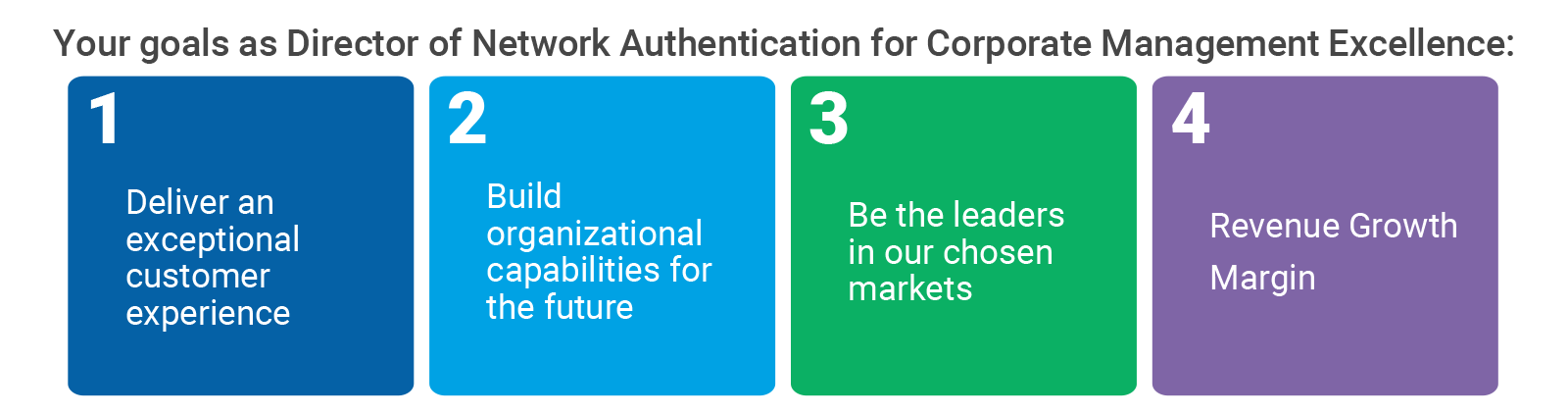
The simulation placed participants in the role of a senior enterprise leader responsible for the performance of a multi-market business called Corporate Management Excellence. Working in teams, Country Managers were accountable for setting direction, allocating limited resources, managing revenue and profitability, developing leaders, and navigating complex stakeholder dynamics over multiple simulated quarters.
The debrief learning discussions were intentionally designed to translate experience into insight by explicitly mapping the decisions teams made to the organization’s Country Manager expectations. Facilitators helped participants examine how each expectation surfaced through everyday leadership choices: what they prioritized, how they allocated time and resources, and how they led through others. This explicit mapping enabled leaders to see the Country Manager expectations as an integrated way of leading that becomes visible through the course of doing the work.
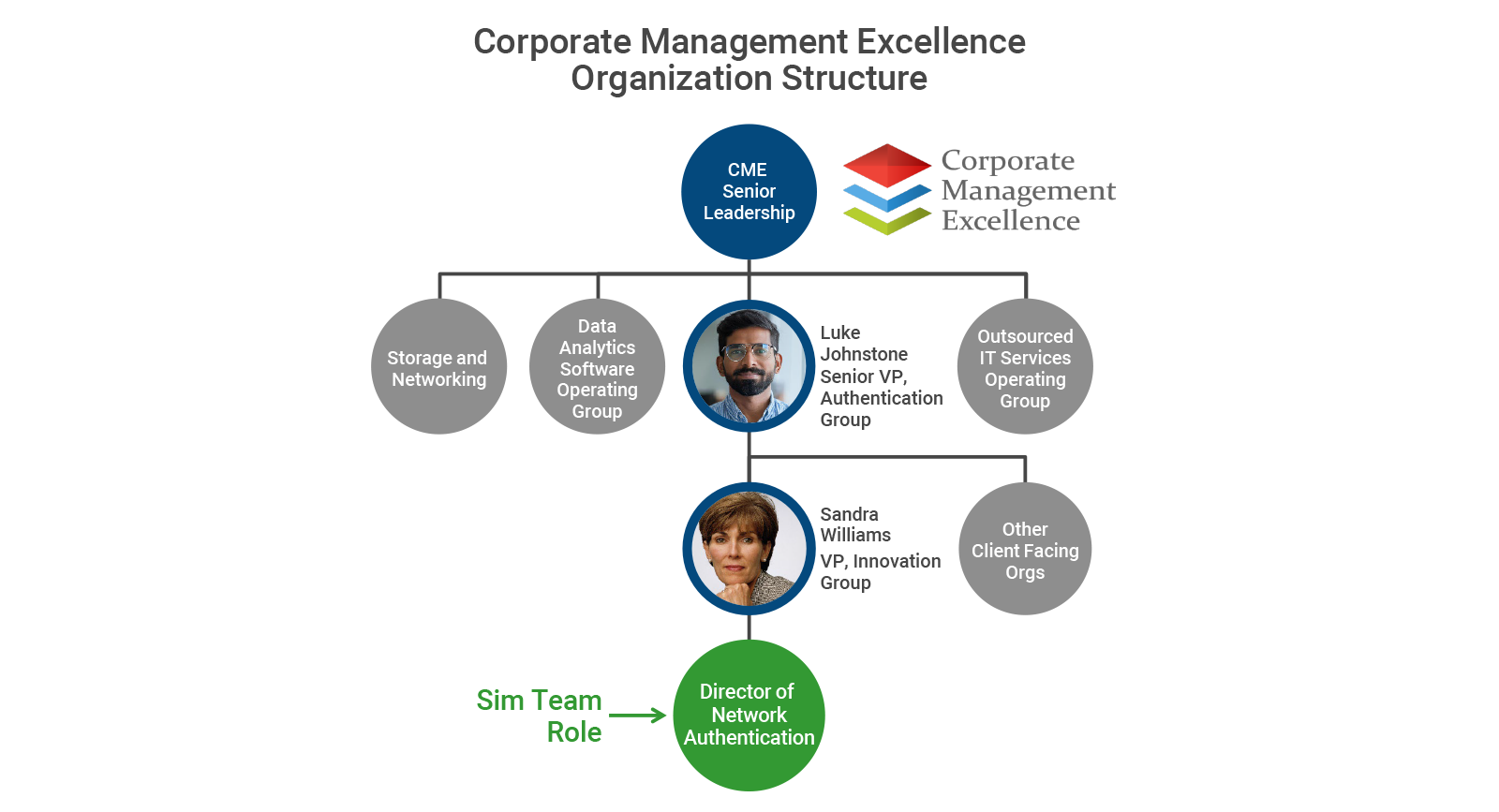
The simulation placed leaders at the head of a business unit within a larger enterprise portfolio, competing against both peer business units and external market players. Leaders balanced competing stakeholder expectations, meeting corporate performance targets while responding to market pressures and maintaining organizational health.
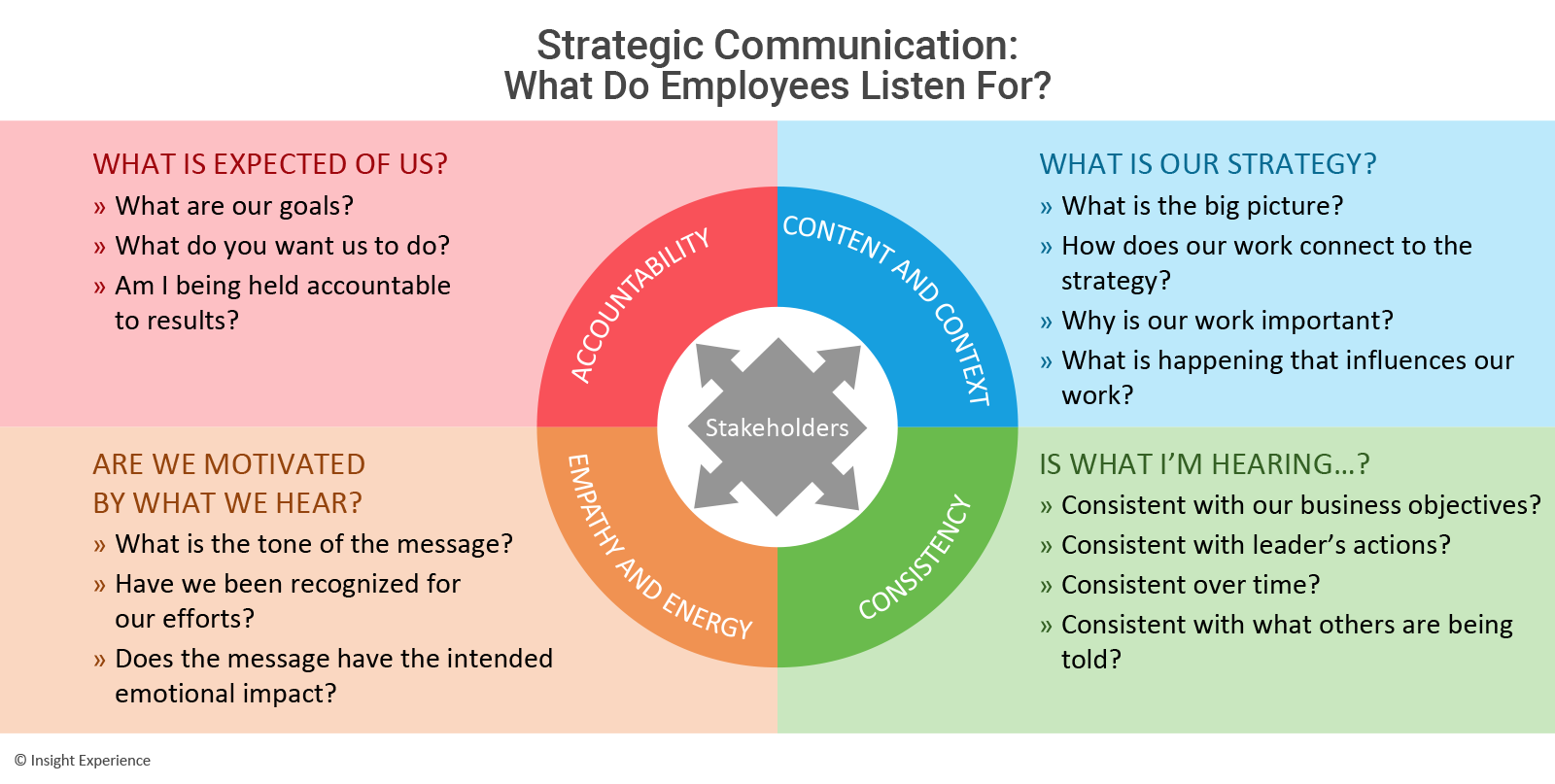
A distinctive feature of the experience was the integration of peer grading. After each decision round, teams reviewed and evaluated another team’s leadership communication using Insight Experience’s Strategic Communication Model™ rubric. This process generated both quantitative scores and qualitative feedback, enabling participants to practice giving and receiving meaningful feedback while highlighting the critical role of clear, consistent, and empathetic communication in executing strategy and leading through others.
Participant Reflections
After the final simulation debrief, C-Suite leaders facilitated a closing discussion to connect insights from the simulation experience back to the role of the Country Manager. Key reflections included:
-
“I learned how the Country Manager Expectations show up in the flow of doing work and why they are so critical.”
-
“I realized that I tend to deprioritize coaching in favor of delivering near-term results, but this experience helped to paint the picture about the long-term impact of making the trade-off consistently.”