



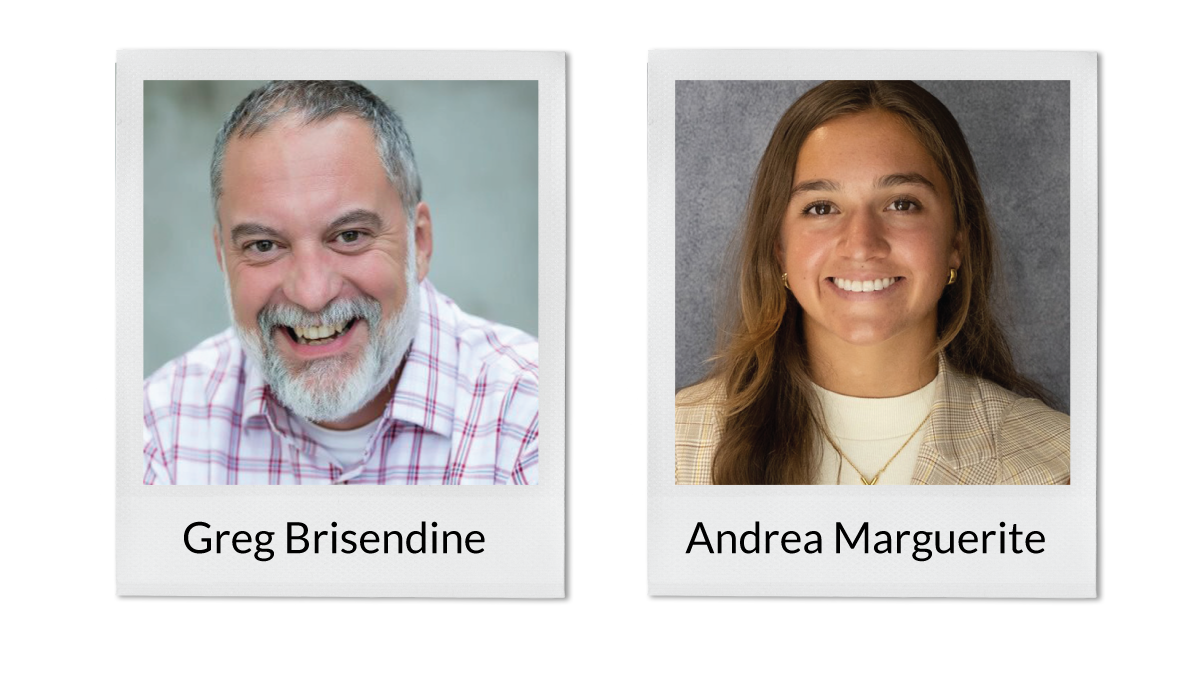
Editor's Note: This post grew out of a team conversation between Greg Brisendine, an experienced leadership coach and Gen X professional, and Andrea Marguerite, a Gen Z team member who brought a fresh perspective to our work at Insight Experience. The conversation explores the real tensions, misunderstandings, and surprising connections that emerge when different generations work together. It also examines what leaders need to know to navigate these dynamics effectively. This post captures the highlights of that conversation in narrative form.
When Andrea takes a midday walk to clear her head, Greg feels irritated.
"I have eaten lunch at my desk for 30 years," Greg says. "I’ve never felt angry about it. It’s just what I do. But when I watch someone younger prioritize self-care, I don’t immediately think, ‘what a great way to stay fresh and focused.’ Instead, a part of me thinks, 'I never get to do that.' And if I'm not aware of the roots of my reaction, I’m going to show up as critical instead of envious, which is more honest."
Meanwhile, Andrea watches Greg eat lunch at his desk, understands the unspoken expectation, and reminds herself why she takes her lunch break away.
This moment captures something essential about leading across generational lines. The challenge shows up as differences in work ethic or values, but it's really about the unexamined assumptions we carry from our own experience and how those assumptions shape our reactions to people who operate differently.
What Self-Awareness Actually Looks Like
For Greg, the independence often ascribed to Gen X feels natural. "Tell me the boundaries and then don’t bother me" is how he describes his default approach. "But when Andrea asks, ‘why can't we do it this way?’" he says, "I have to catch myself. If I don't recognize that my reaction comes from my generational experience, I'm going to be constantly annoyed."
Andrea sees it from a different side. "Gen Z gets labeled as prioritizing work-life balance, but it's framed as if we're not really working. People see videos of Gen Z still in bed at 10 a.m., and it becomes this whole narrative. But wanting balance doesn't mean we're not driven. It reflects a belief that meaningful work and a full life don’t have to be in competition."
Greg agreed but noted he had to learn it. "I started my career when work-life balance wasn't even a concept. Hobbies outside of work were not a thing. I discovered the importance of balance on the job and as I got older."
The leadership lesson here isn't about who's right. It's about recognizing whether your irritation with someone else's work style might reveal more about your own unexamined patterns than about their ability to achieve results.
The practical question for leaders: When you feel frustrated by how someone from a different generation works, ask yourself: Am I annoyed because they're ineffective, or because they're doing something that doesn’t match my world view?
The Emotional Intelligence Gap and Who's Closing It
When asked about great leadership, Andrea's response was immediate: "Leading by example, being honest and accountable. But also having emotional intelligence, which means being empathetic, understanding what makes someone tick."
She paused. “I think Gen Z does a really good job with this. My parents have talked about how, when they were building their careers, emotional connection at work wasn’t really a thing. Having that now actually impacts my performance, because trust is such a big part of how I work.”
Greg agreed on all counts, adding that “emotional intelligence wasn’t something we ever talked about, but the best leaders were still really good at it.”
He shared a telling story from 2003 about returning to work a week after his father's death, not telling anyone, and then walking out of a meeting when emotions caught up with him. "Super Gen X thing—pack it all away, don't talk about it. My manager stopped the meeting and asked what I needed. I said, 'My father passed away, but everything's good. Let's get back to the meeting.'"
The contrast reveals how different generations have approached the same challenge. What Gen Z brings as a starting point—awareness of mental health and a permission to be human—many Gen X leaders developed through experience, recognizing what the workplace needed and adapting accordingly.
The practical tip for leaders: The emotional intelligence your younger team members often demonstrate isn't weakness or oversensitivity. It's a strategic capability you likely want to recognize and cultivate, because emotional intelligence provides a shortcut to interdependence, which is a shortcut to results.
The Speed Trap
“I think back to what it meant to communicate through inter-office memos,” Greg said, “instead of email or instant messaging. Technology, especially AI, means that business moves faster every year, and I’ve had to adapt.”
His response is radical openness. "If I'm going to be effective, I've got to be really vulnerable and open to learning. I have to be ready to hear something from Andrea that has never occurred to me and bring it in as valuable, which can feel threatening. I could easily fall into 'I've been doing this for 35 years, so you can't tell me anything.' Honestly, if that’s my position, I'm headed for irrelevancy."
Andrea is learning to benefit from Gen X colleagues. She noted working on a client project with an older colleague and how it taught her how much experience shapes decision-making. “There's a quiet confidence from having seen situations play out before—the ability to stay calm, ask questions, and draw on what happened in the past. I'd probably panic and try to fix everything immediately. Watching more experienced colleagues has helped me slow down and trust the process."
The insight for leaders: Multi-generational teams work best when speed and experience complement each other, not compete against each other. Younger team members bring rapid pattern recognition and fresh connections. More experienced leaders bring structure and perspective that prevents costly panic reactions. Neither is superior, and both are necessary.
What Everyone Actually Wants
Beneath the surface differences, some fundamentals remain constant.
"Everybody wants meaningful work," Greg said. "I didn't start knowing that, but when I got some, I was like, 'Oh yeah, I want more of this.' So that became the benefit of experience."
Andrea nodded. "I think I and other Gen Z folks are focused on choosing sustainability over constant hustle and grind. Our generation believes that having a life outside of work doesn’t make us less driven; it allows us to bring more energy, clarity, and intention to our work.”
They’re arriving at the same insight from different directions: Self-care is essential for sustainability, not optional. Greg noted, "I definitely now appreciate the value of work-life balance. It gives me hope to see a generation starting with the idea that we are valuable in and of ourselves and worthy of self-care. I think that's what the new speed of business requires if we're all going to keep up."
What This Means for Your Leadership
If you're leading a multi-generational team, here's what actually matters:
-
Name your own generational patterns. You can't lead effectively across age differences if you don't know your own biases. What did you absorb about work from your formative years? How does that shape your expectations now?
-
Distinguish between effectiveness and familiarity. When someone's approach bothers you, ask: Are they actually underperforming, or are they just working differently than you would? The walk Andrea takes at lunch doesn't compromise her productivity. It might even enhance it. Similarly, the structure Greg uses for prioritization isn’t limiting creativity. It likely provides focus.
-
Create space for mutual learning. The best multi-generational teams create reciprocal learning. Experienced leaders should mentor based on what they’ve learned while simultaneously staying curious about what younger team members see that they don’t.
-
Address tensions directly. When Greg noticed his irritation about Andrea’s self-care, he named it honestly and examined where it came from. When Andrea saw the social media mockery of Gen Z workers, she brought it directly to Greg rather than letting assumptions build. Avoiding these conversations doesn't make them go away; it just lets them fester.
-
Focus on what connects, not what divides. Everyone wants meaningful work. Everyone wants to feel trusted. Everyone wants to contribute. The specifics of how people achieve those things will vary by generation, personality, and circumstance. But the underlying needs remain remarkably consistent.
The Bottom Line
Managing across generations isn't about learning to "deal with" Gen Z or "translate for" Gen X. It's about building enough self-awareness to recognize when your reactions say more about your history than about someone else's performance.
These conversations are becoming more common, allowing leaders to adapt, learn, and lead more effectively across all these age groups.
The good news is that you're probably already doing some of this well. The challenge is doing it intentionally, with enough honesty to admit when you're wrong and enough humility to learn from people who've had radically different life experiences than your own.
That's not generational leadership. That's just leadership.