





How confident are you in your decision-making skills? Could you work with a team of four cross-functional peers, collectively taking on the role of a senior leader in an organization? Sounds straightforward, right? What if your team has 90 minutes to come to consensus on a dozen strategic decisions, make numerous quantitative operational decisions and write multiple communications to various members of your organization?
The real question isn't whether the team can make these decisions. It's whether they're willing to own the decisions and the outcomes they create.
Why Decision-Making Isn't the Real Skill
One of the most common requests we hear from clients is that they want their leaders to get better at "decision-making." But leaders make dozens of decisions every day. If it's that common, why do we feel the need to “teach” it, and what actually separates good leaders from the rest?
When we teach effective decision-making, we use a model built on Decision Quality, Decision Practices, and the thread that ties them together: Decision Leadership.
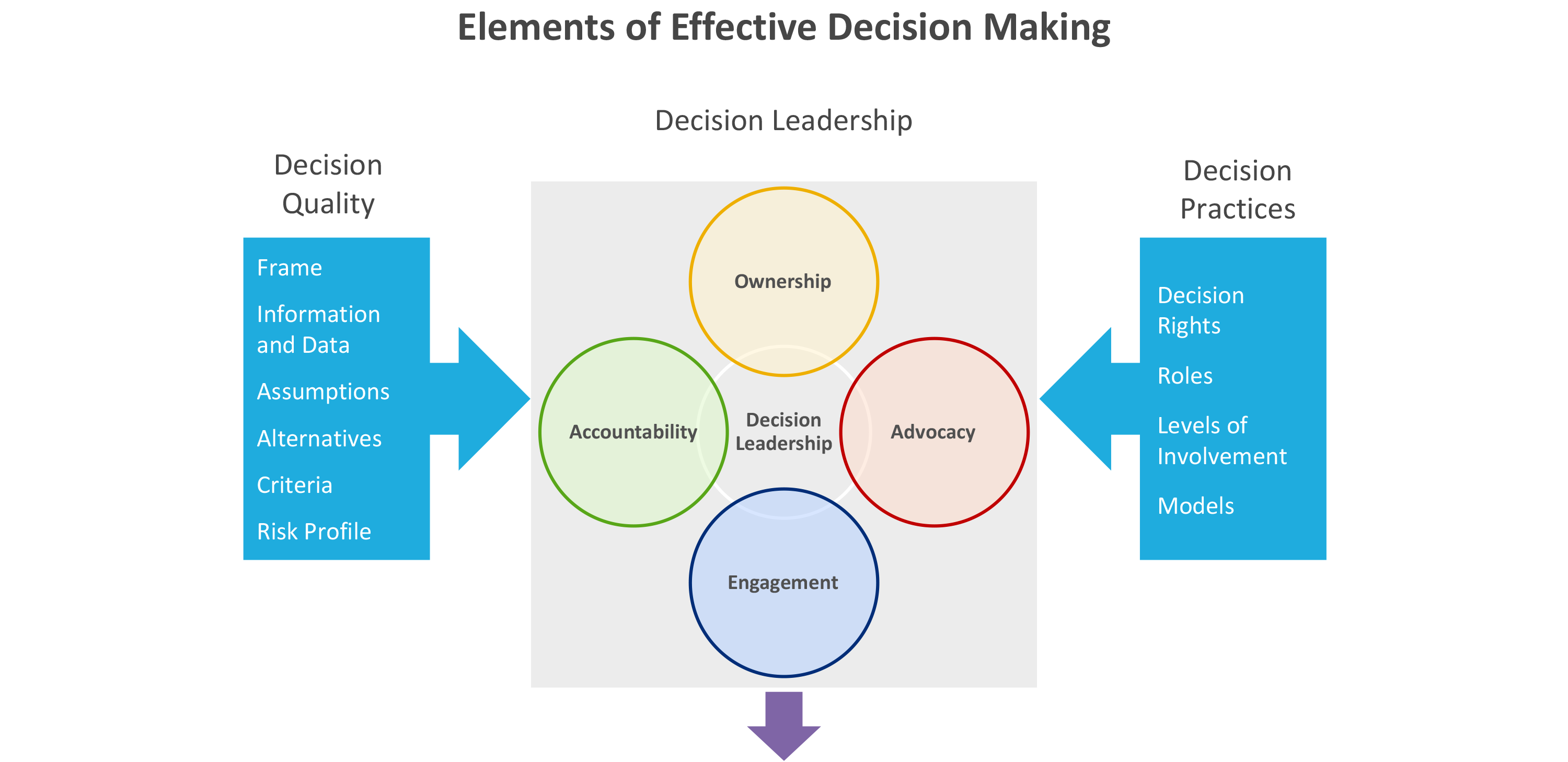
A key element of Decision Leadership is Ownership, anchored in three questions a leader needs to ask:
-
Will you assume responsibility for making and sustaining this decision through implementation?
-
Are you willing to be the “face” of this decision?
-
Will you drive the decision forward and keep others informed of its status and progress?
Decision Ownership
What differentiates effective leaders isn't just their willingness to make a decision; it's their willingness to own it as it plays out over time, even under real pressure. Leaders often don't focus on this longer-term element of decision-making. But when they do, they start to see what's really slowing down execution in their organizations. Poor decision ownership leads to reopened choices, weaker buy-in, and inconsistent execution.
Deepen Decision Leadership Skills
The scenario at the beginning of this post is real. A typical round of an Insight Experience business simulation includes all of those decision points, designed to replicate the operating and leadership tensions that exist in most businesses, all compressed into a shorter timeframe.
It's when teams receive their results—the business outcomes of those decisions—that they deepen their decision leadership skills. They have to own the resources required to execute their choices, however ambitious those choices were. They have to explain results, good and bad, to their employees. And they see firsthand how tempting it is to revise history and second-guess a decision once hindsight makes it look obvious.
Leaders in the simulation have to demonstrate decision ownership. And in doing so, they build the skills that improve their decision leadership back on the job. Simulations teach people to make decisions — and, more importantly, to own them.
Download our Decision Leadership Guide™ to learn more.