





Heat creeps up your face, a cold sweat breaks across your body, your heart pounds in your chest: You’ve made a mistake. Every leader knows that feeling. The embarrassment is immediate. It doesn’t feel like it yet, but you’ve just gained the most powerful tool in life and business: experience.
While “learn from your mistakes” may be a popular refrain, the reality is most of us are too embarrassed to productively reflect and embrace the lessons we ought to learn. Mistakes can be costly for individuals and for businesses, and every instinct we have tells us to avoid them. But mistakes can be powerful learning tools that, when approached correctly, lead to experience and understanding far outweighing anything theoretical.
Mistakes Are How We Build Experience
This idea really hit home for me recently when, after 20+ years of sailing, I decided to work toward a skipper’s license. To do so, I had to take a few prerequisites that most sailors take as novices. As the instructor enumerated the things we would learn and the pitfalls they would help us avoid, I found myself laughing and shaking my head: I had fallen into nearly every single one of at one time or another.
And I can tell you, I wasn’t laughing when I was making those errors. But with distance and hindsight, I realized that each time I’ve tripped up, I’ve also gained something: an almost physical understanding of what can go wrong, why it goes wrong, how to fix it, and how to avoid it in the future. That is the power of experience.
Of course, experience is invaluable in business. James Dyson famously failed more than 5,000 times over five years before arriving at a successful vacuum prototype. Today, Dyson is not only a household name — it also represents the highest quality and most innovative technology. Dyson understands the value of mistakes and failure and has built a company that embraces experimentation as a cornerstone of forward-thinking business. In his own words, “Failure is the best medicine — as long as you learn something” (Dowling, 2013).
Experience Is Contagious
As Dyson shows, experience is valuable, not only to the person who has undergone the painful process of procuring it, but to all those around them as well. His hard-won failures made him a better engineer and shaped an entire company culture. That is experience at its most contagious.
Experience is equal parts knowing how to get it right and knowing what to do when things go wrong. We gain it by being in sticky situations and staying open to the lessons they offer.
This is one of the most important points about mistakes: For them to be real mechanisms of growth and learning, we cannot hide from the embarrassment and shame they bring. We have to be vulnerable, reflect, and stay open to the discomfort they cause. That’s harder than it sounds.
Coaching Your Team Through Mistakes
The same openness that helps us learn from our own mistakes is exactly what we need to help our teams learn from theirs.
The key to coaching through mistakes comes down to two things: Address the immediate damage, then step back to understand the root cause and the larger impact on the business, stakeholders, and customers. And act early — the sooner you catch a mistake, the more you can shape what happens next.
If you’ve cultivated a team that takes pride in and understands the bigger picture behind their work, the distress of making a mistake will be enough. The lesson will take hold. Creating a space in which it’s acceptable to own mistakes is key, and it starts at the top.
One CEO I interviewed earlier this year told me he and his team start each huddle by sharing both successes and mistakes from the week. He goes first, naming his own missteps and the fixes he’s putting in place. In doing so, he models vulnerability and accountability and sets the tone for everyone else.
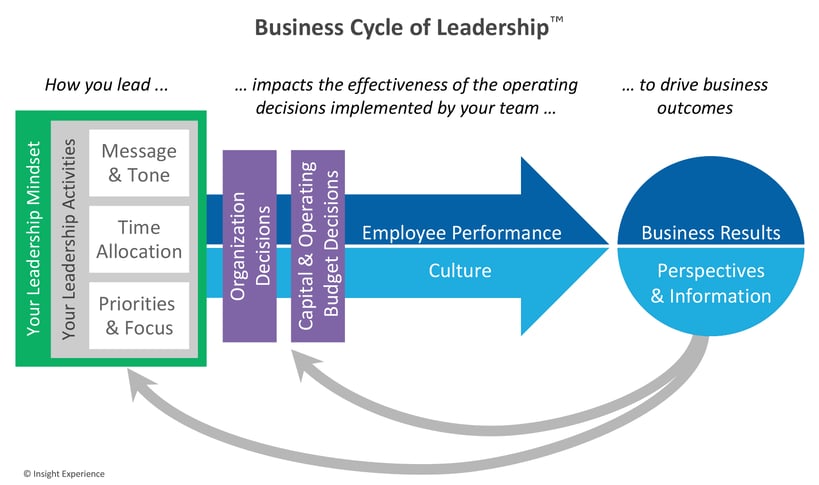
This is the Business Cycle of Leadership™ in action. The model holds that what leaders say, how they spend their time, and the priorities they set are the primary levers for building trust, engagement, and transparency on a team. When those conditions are in place, people bring you the truth, including their mistakes. When they're not, you get silence, or worse, misleading information.
What that CEO doesn’t do is blame or shame his team when things go wrong — and for good reason. Blame does little to improve performance or understanding. In fact, it often backfires: When people are focused on your reaction and their own feelings, they’re less likely to engage with the actual problem or take ownership of it going forward.
Some people equate blame with accountability. They’re not the same thing. Blame shifts focus away from the issue and onto the relationship, undermining the very accountability it claims to enforce. A team that only performs well when you’re watching hasn’t learned anything; it is just performing for you.
How to Help Your Team Learn from Mistakes
Building a culture where mistakes drive growth doesn’t happen by accident. These practices help you create the conditions for real learning:
-
Anticipate where mistakes are likely. Consider how many aspects of what someone is working on are new to them — and to you. Are they out on the skinny branches of their understanding? Knowing where the risks are means you can be ready to coach through them when they arise.
-
Explain the company and unit strategy and why their work matters to customers and stakeholders. When people understand the bigger picture, they're better equipped to understand the real impact of their mistakes — and to care about fixing them.
-
Conduct routine check-ins. Create opportunities to coach through decisions, talk through outcomes, and surface mistakes early, while there’s still time to learn from them and course-correct.
-
Schedule regular AARs. After-action reviews should not be reserved for when things go poorly. Teams should come together regularly to discuss what went well in addition to what needs improvement. Reviewing the whole picture is more useful, and more palatable, than only examining what went wrong.
-
Share your own mistakes openly and encourage the same from your team. Everyone learns without having to make the same blunders themselves, and it builds a culture in which mistakes are owned, acknowledged, and solved rather than hidden.
-
Give your team room to practice. Business simulations allow teams to experience the real impacts of their decisions, including the visceral sensation of getting things wrong, without risking the business. Every decision can be analyzed and learned from in real time.
It’s hard to forget the feelings that accompany a serious mistake. But those same feelings, if we let them, are what solidify real understanding. As they say, a smooth sea never made a skilled sailor.
References
Dowling, S. (2013, March 13). Frustration and failure fuel Dyson's success. BBC Future. https://www.bbc.com/future/article/20130312-failure-is-the-best-medicine